TED Talks on Modern Education
Posted On Tuesday, July 5, 2011 at at 7/05/2011 03:08:00 PM by Gary HartleyThere is a lot of talk about public and compulsory education in the 21st century. Some of this talk is just that... talk. In other cases, the discussion only starts with criticism, then moves to solutions. Check out these examples:
Math Class Needs a Makeover
M-PICT Summer Faculty Development Week, 2011
Posted On Thursday, June 2, 2011 at at 6/02/2011 03:33:00 PM by Gary HartleyThanks to our ATE partner M-PICT for offering yet another wonderful summer event. Here are the links to:
- More Information on the Event
- Facebook page
- M-PICT BLOG http://mpictcenter.blogspot.com/
- YouTube Channel
This huge consortium of colleges and industry is breaking new ground in ICT every day. Stay connected to keep up!
CPATH II/SRCT Update
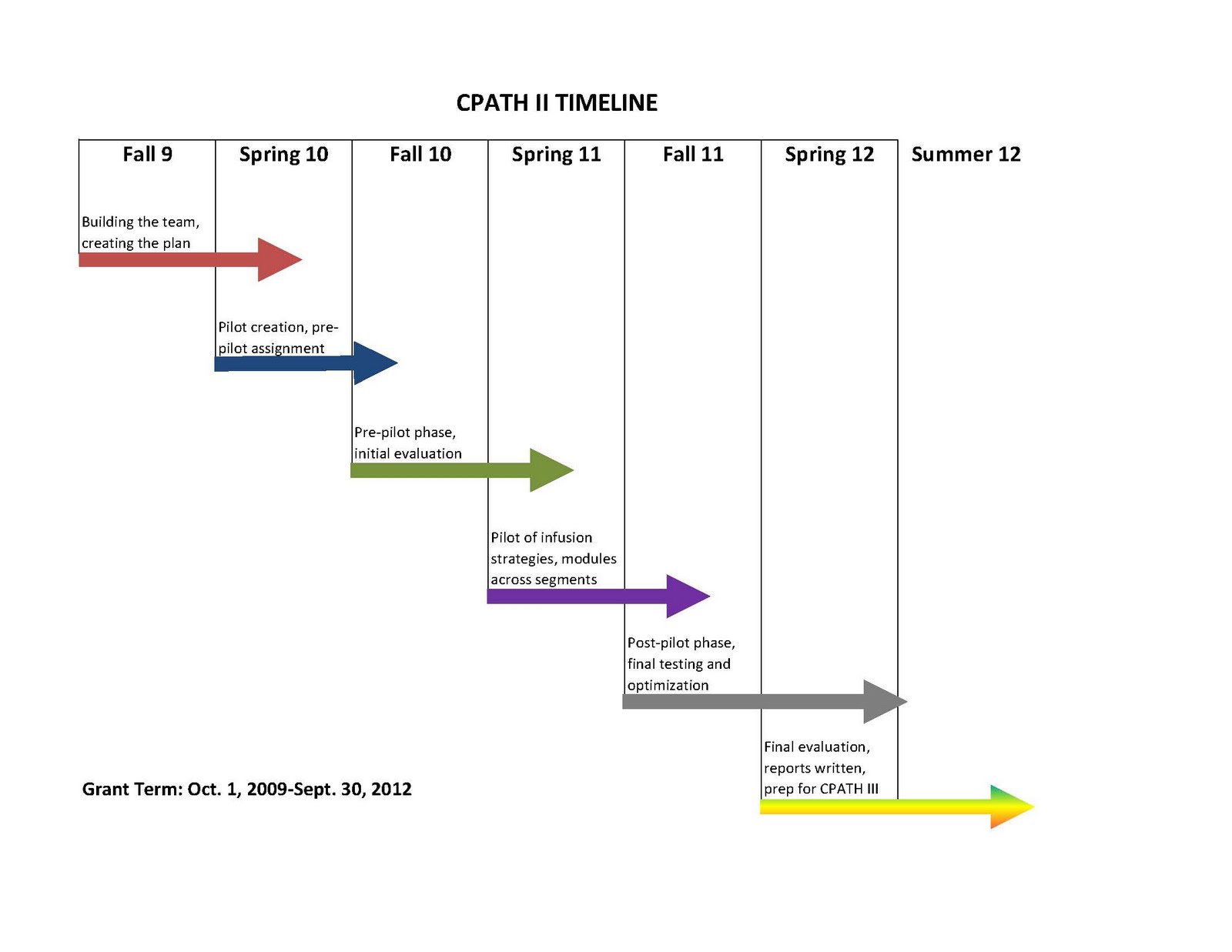
Posted On Tuesday, January 25, 2011 at at 1/25/2011 10:41:00 AM by Gary HartleySee the CPATH II update for January, 2011 here.
Revisiting CT Framework and Rebranding CISE
Posted On Wednesday, January 19, 2011 at at 1/19/2011 08:48:00 PM by Ray DePenaIn November 2009, I wrote a post about developing a framework that enables a Student Driven CT Management Program allowing students to self select and direct their studies accordingly. Today, I ran across this:
Twenty Top Ideas for a Better MBA

First Place: Stackable Knowledge Units
Idea: Rather than a fixed generic curriculum, Stewart suggests creating specialized stackable "knowledge units" made up of perhaps three or four courses or co-curricular activity units each. This allows students to consume "chunks" of knowledge as needed or desired for career development, have some certificate as an intervening credential, and potentially create a market for knowledge units in specific technical or specialized areas drawn from engineering and the sciences. Individual students could choose and combine accredited knowledge units, even across multiple universities, to create unique career development sequences based on their individual needs.
Stewart: "If breaking down barriers to trade is good for business, it should also be good for business education. Let's create a market for knowledge units instead of degrees."
We may be on the right track after all.
Cloud Computing, Innovation, and FLC Students
Posted On Friday, August 20, 2010 at at 8/20/2010 07:05:00 PM by Ray DePena
Maryland Education Enterprise Consortium and UMBC Announce Agreement with Google
"The Maryland Education Enterprise Consortium (MEEC) and the University of Maryland, Baltimore County (UMBC) have announced an agreement that makes Google Apps for Education available to the 189 K-12 and higher educational institutions in Maryland that are members of MEEC. Google Apps, which is free for educational institutions, currently provides email, documents, group pages, chat and other products to over eight million students.
UMBC’s decision to migrate to Google comes after engaging in conversations with students, faculty and staff. “As we discussed options for outsourcing email with students, they overwhelmingly recommended Google because it works exceptionally well with their mobile lifestyle,” said Mike Carlin, UMBC assistant vice president of IT. “UMBC will immediately set up the 3,000 new students enrolling for classes this fall on Google email and will provide the 10,000 existing students with the option to convert their accounts over to Google in late August 2010. By the start of the spring 2011 semester, we anticipate having all students moved over to Google.”"
Recruiting Secrets: The Power of Relationship
Posted On Monday, April 12, 2010 at at 4/12/2010 02:11:00 PM by Gary Hartley
In our last meeting, we discussed briefly the importance of relationship in recruiting team members for our project(s). I like doing recruiting, and in most cases I find a good match between the needs of my project and my friends, colleagues and contacts. When you think about how many people you know from work, the neighborhood, the community, and civic organizations, the possibilities for garnering appropriate expertise - not to mention diversity - are limitless!
If you need to develop the infrastructure for your team, you might find the following suggestions helpful:
- Know your "elevator pitch." Keep it factual and accurate, and talk to people in everyday parlance (they don't have months of CT discussions under their belts like we do!)
- Share your passion for the project. Tell them why you are involved, and what "grabs" you about the content, the goals it has, or working with the rest of the team.
- Give them some references to check out, including the BLOG, NSF information, Wing's material, or anything else you find interesting.
- Invite people to the AdCom meetings so they can see what it is like to work with this group. Offer to go to the meeting together, if that helps!
- Give a clear vision for the work of your team, the time commitment involved, and what role you think they could play. Make this a discussion of what interests THEM about the topic.
- Be sure to mention the contributions they could make to this effort, both in the short and long term. Let them know their value to our efforts!
In my experience, people will get involved if they think there is a long term goal that is worthy, and if they know others are enthusiastic about it and will value their input. So, start making your list! Here is a tool that will help...