WSJ: Landing a Job of the Future Takes a Two-Track Mind
Posted On Saturday, January 9, 2010 at at 1/09/2010 07:50:00 PM by Brandy Anderson Landing a Job of the Future Takes a Two-Track Mind
Career Experts Say Positions in Growing Fields Will Require an In-Demand Degree Coupled With Skills in Emerging Trends
By DIANA MIDDLETON - Dec 28, 2009 - Wall Street Journal
If you're gearing up for a job search now as an undergraduate or returning student, there are several bright spots where new jobs and promising career paths are expected to emerge in the next few years.
Technology, health care and education will continue to be hot job sectors, according to the Bureau of Labor Statistics' outlook for job growth between 2008 and 2018. But those and other fields will yield new opportunities, and even some tried-and-true fields will bring some new jobs that will combine a variety of skill sets.
The degrees employers say they'll most look for include finance, engineering and computer science, says Andrea Koncz, employment-information manager at the National Association of Colleges and Employers. But to land the jobs that will see some of the most growth, job seekers will need to branch out and pick up secondary skills or combine hard science study with softer skills, career experts say, which many students already are doing. "Students are positioned well for future employment, particularly in specialized fields," Ms. Koncz says.
Career experts say the key to securing jobs in growing fields will be coupling an in-demand degree with expertise in emerging trends. For example, communications pros will have to master social media and the analytics that come with it; nursing students will have to learn about risk management and electronic records; and techies will need to keep up with the latest in Web marketing, user-experience design and other Web-related skills.
Technology Twists
More than two million new technology-related jobs are expected to be created by 2018, according to the BLS. Jobs that are expected to grow faster than average include computer-network administrators, data-communications analysts and Web developers. Recruiters anticipate that data-loss prevention, information technology, online security and risk management will also show strong growth.
A computer-science degree and a working knowledge of data security are critical to landing these jobs. Common areas of undergraduate study for these fields include some of the usual suspects, such as computer science, information science and management-information systems.
But those might not be enough. That's because not all of those jobs will be purely techie in nature. David Foote, chief executive officer of IT research firm Foote Partners, advises current computer-science students to couple their degrees with studies in marketing, accounting or finance. "Before, people widely believed that all you needed to have were deep, nerdy skills," Mr. Foote says. "But companies are looking for people with multiple skill sets who can move fluidly with marketing or operations."
Social media has opened the door to the growth of new kinds of jobs. As companies turn to sites like Twitter, LinkedIn and Facebook to promote their brands, capture new customers and even post job openings, they will need to hire people skilled in harnessing these tools, Mr. Foote says. In most cases, these duties will be folded into a marketing position, although large companies such as Coca-Cola Co. are creating entire teams devoted exclusively to social media.
Similarly, employment for public-relations positions should increase 24% by 2018. Job titles—like interactive creative director—will reflect the duality of the required skill sets.
NASA Generations PPT
Posted On Wednesday, January 6, 2010 at at 1/06/2010 04:36:00 PM by Gary Hartley
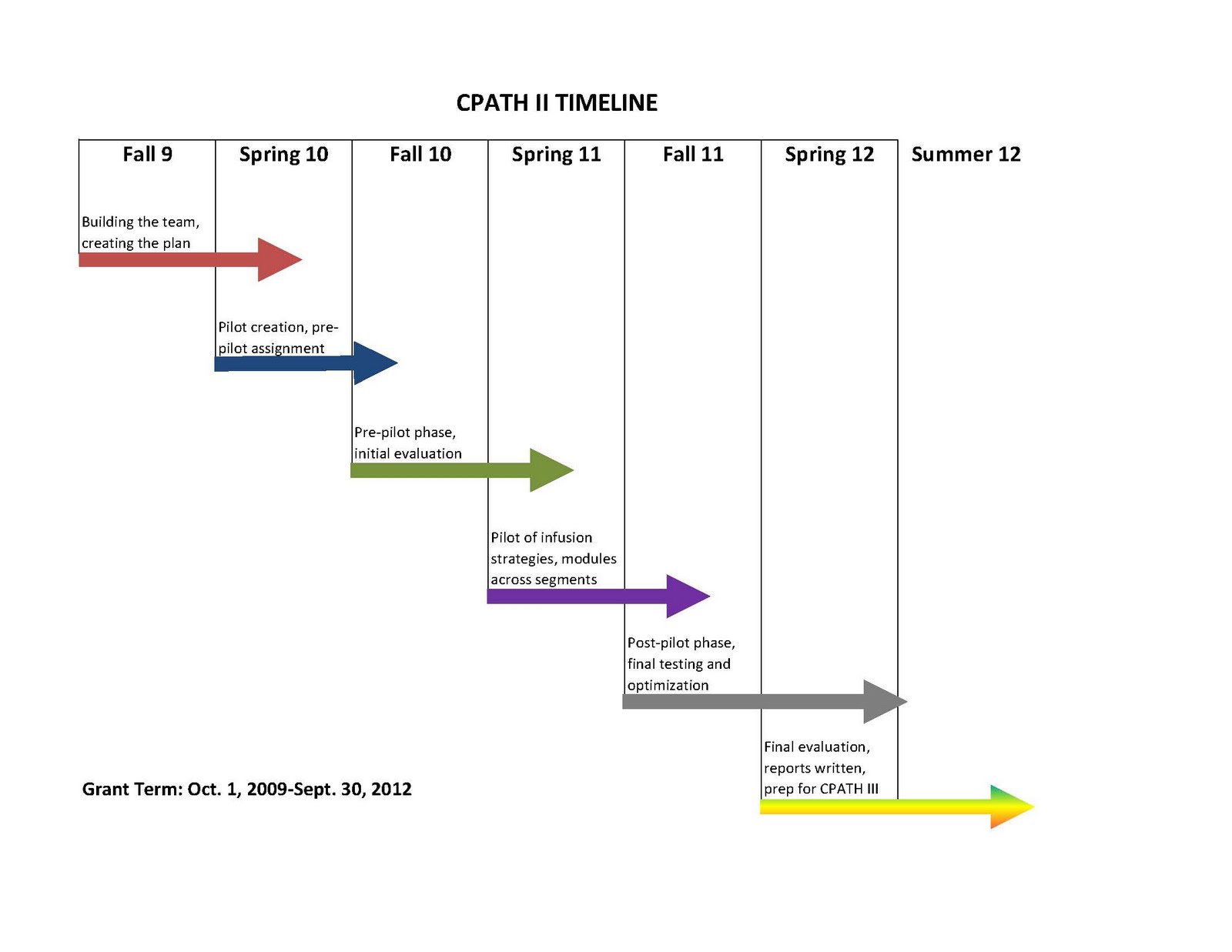
This link has been around for a while, and still is poignant. It has a lot to say about how we get young people involved in high-tech areas of interest (in this case, NASA). We can certainly learn from this as we move ahead toward the CPATH II goals, seeking to attract folks to the STEM fields represented by our pipeline model. Let me know what you think!
Geeks Must be "COOL!"
Posted On Tuesday, January 5, 2010 at at 1/05/2010 08:28:00 AM by L SantoroThe latest e-newsletter from the National Alliance for Partnerships in Equity in Education Foundation featured this article from The New York Times. It will resonate with our group!
http://www.nytimes.com/2009/12/21/technology/21nerds.html?_r=3&ref=education
Here is a key point:
"In other words, the nation’s economy is going to need more cool nerds. But not enough young people are embracing computing — often because they are leery of being branded nerds."
Geeks must be "COOL!"
Technology and Worker Transformation
Posted On Sunday, January 3, 2010 at at 1/03/2010 06:54:00 PM by Phil Tierney
I believe the CPATH mission is all about upgrading or updating the infrastructure of education. Furthermore, educational systems are a critical component of the infrastructure of our economy, easily as fundamental as transportation and communications components. So what does this mean in human terms?
Frank Langfitt's recent excellent NPR series on challenges faced by laid off furniture workers as they vie for new jobs offered at a Google data center in rural North Carolina illustrates several opportunities we should address as we develop approaches to CT infusion across the entire pipeline.
Retraining or new skill development is easily as important - and as urgent - as developing skills on the mythical tabula rasa. Introducing skills in the building block approach assumed by most curricula and introducing skills to conditioned workers with the blinders and habituation of experience likely require significantly different approaches. While this would appear to expand the scope or complexity of the CPATH problem domain, I think that appropriate CT content could become a survival payload in retraining or re-skilling programs launched in pursuit of economic recovery or transition.
Working Document: CPATH II Planning
Posted On Wednesday, December 23, 2009 at at 12/23/2009 09:22:00 AM by L Santoro
Please see this link for the Strategic Planning Document as of 12.18.09. It is a work in progress and the next work session is 1/22/10 in FL1-8 from 8am to 12noon.
http://docs.google.com/Doc?docid=0Aei2hdsuTyDTZG01azVjbV83ODVnaGpnbXdoYg&hl=en
On Education Inspiration and CT Innovation
Posted On Friday, December 11, 2009 at at 12/11/2009 08:02:00 PM by Ray DePena Named among the top 5 most inspirational videos on the web by Mashable. It's a great example of immersion on a community scale. We should discuss this approach at length during our work in gap closing actions.
Geoffrey Canada on 60 Minutes: Closing The Achievement Gap through the Harlem Children's Zone.
Having seen the success of the Harlem Children's Zone, in 2009 US President Barack Obama announced plans to replicate the HCZ model in 20 other cities across the nation.
You can view a brief clip below or the full episode by 60 Minutes.  Designer Focuses on Marketing Adjustable Eyeglasses at $1 a Pair
At least 180 million children could use glasses to help with their schoolwork, according to a report from the Child Vision Conference in Oxford in 2007.
Prosperity Index
Posted On Monday, December 7, 2009 at at 12/07/2009 09:55:00 AM by Gary Hartley
In the December 4 ExecCom meeting, there was a brief discussion about how business, industry and government assess the growth and economic health of the Sacramento region. In a partial answer to this question, I would offer the 2009 Prosperity Index published by the Center for Economic Research. The PDF version of the report linked above is quite interesting, and I think give us a good grounding in how these assessments are made and presented. Take a look!